Norse mythology has a large cast of characters, and family relationships are not always consistent between sources. Thor’s family is a good example: the main names are clear, but some details depend on which poem or which part of Snorri Sturluson’s Prose Edda you read. This guide sets out the relationships that the sources agree on and flags the points where they differ.
Thor’s father: Odin
Thor is consistently described as a son of Odin, the chief of the Æsir, the god of wisdom, poetry, war and death. In skaldic poetry Thor is often referred to with kennings, poetic phrases, such as “son of Odin” or “Odin’s son”. The two gods have quite different personalities. Odin is secretive, cunning and associated with kings and poets, while Thor is direct, strong and associated with ordinary farmers and travellers.
The poem Hárbarðsljóð plays on this contrast. In it, Thor tries to cross a river and argues with a rude ferryman called Hárbarðr, “Greybeard”, who mocks him at length. Most readers take Hárbarðr to be Odin in disguise, and the poem works as a comic exchange between the two styles of god.
Thor’s mother: Jörð
Thor’s mother is Jörð, whose name means “earth”. She is described as a giantess in some sources, which is notable because it makes Thor, the great enemy of the giants, partly giant himself. Snorri also mentions the names Fjörgyn and Hlóðyn, which appear in poetry as names for Thor’s mother and are often treated as alternative names for the same figure. The connection between a thunder god and an earth mother has parallels in other Indo-European traditions, though scholars disagree on how much weight to give those comparisons.
Thor’s wife: Sif
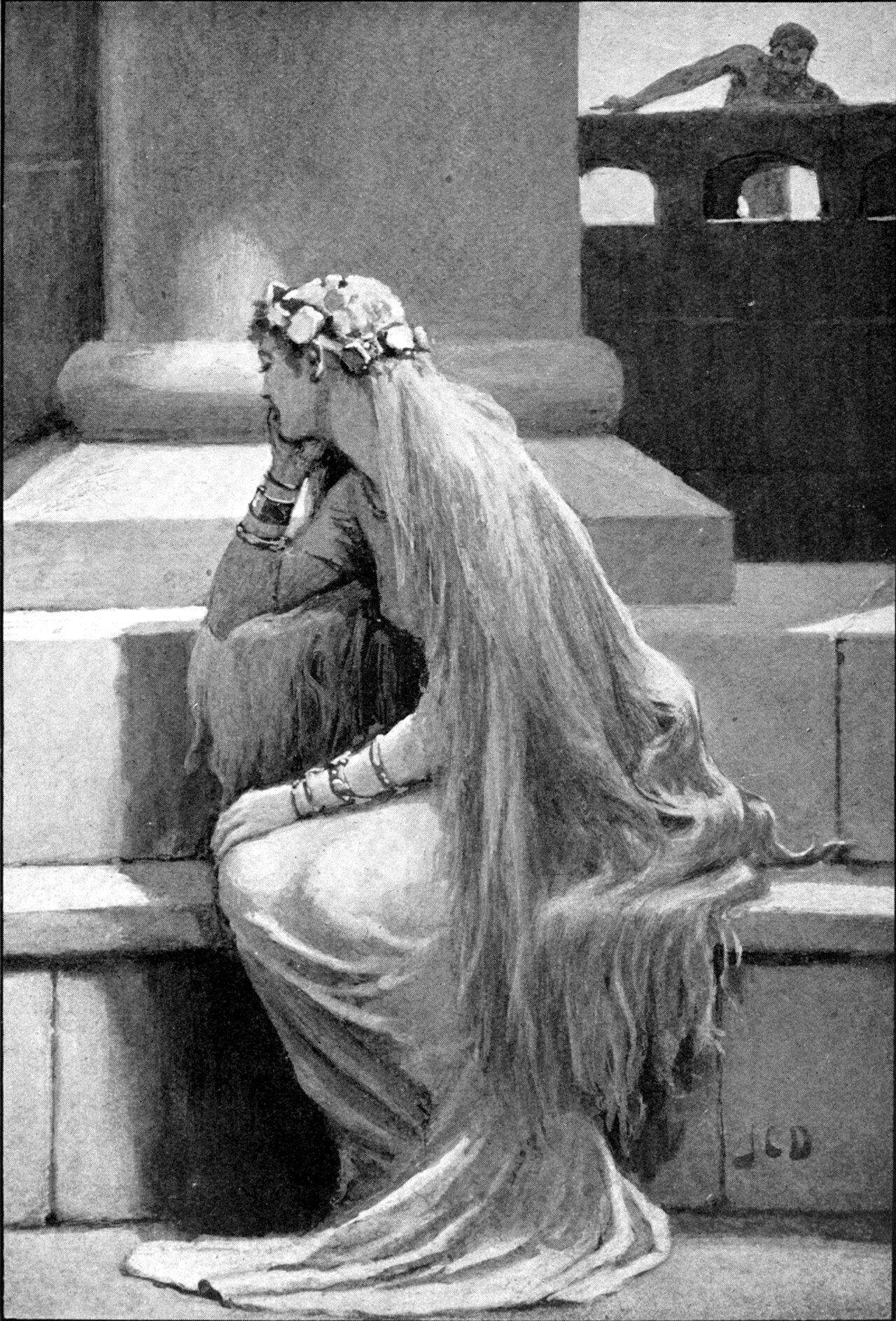
Thor’s wife is the goddess Sif, best known for her golden hair. The surviving sources say relatively little about her as a character. The most famous story involving her is the one in which Loki cuts off her hair, which leads to the creation of Mjölnir and other treasures, as described in our post on the hammer. Some scholars have suggested that Sif’s golden hair was linked to ripe fields of grain, which would pair neatly with a sky god who brings rain, but this interpretation is speculative.
Sif also had a son from an earlier relationship, Ullr, a god associated with skiing, archery and hunting. That makes Ullr Thor’s stepson.
Thor’s sons: Magni and Móði
Thor has two sons named in the sources. Magni (“strong” or “mighty”) is the son of Thor and the giantess Járnsaxa. In Snorri’s account of Thor’s duel with the giant Hrungnir, Thor ends up pinned under the dead giant’s enormous leg. None of the gods can lift it until Magni, then only three nights old, arrives and lifts it off easily. Thor rewards him with the giant’s horse, Gullfaxi, which annoys Odin, who thinks the horse should have gone to him.
Móði (“angry” or “brave”) is named as another son, though his mother is not specified. The Poetic Edda poem Vafþrúðnismál says that Móði and Magni will inherit Mjölnir after Ragnarök, when Thor has died fighting the world serpent. In that sense the sons represent the survival of Thor’s strength into the new world that follows the destruction.
Thor’s daughter: Þrúðr
Thor’s daughter is Þrúðr, often anglicised as Thrud. Her name means “strength” and connects to Thor’s own region of Asgard, Þrúðvangr. In the poem Alvíssmál, a dwarf named Alvíss arrives to claim a bride, apparently Thor’s daughter, who had been promised to him while Thor was away. Thor agrees to the match only if the dwarf can answer his questions about the names of things in all the worlds. The questioning lasts until sunrise, when the dwarf is turned to stone.
Thor’s companions and servants
Thor’s household also includes two human servants, the siblings Þjálfi and Röskva. According to Snorri, they join him after Þjálfi breaks one of Thor’s goats’ leg bones to get at the marrow, against Thor’s instructions. When the goat is revived the next morning it is lame, and the frightened family hands over the two children as compensation. Þjálfi becomes Thor’s fast-running companion on several adventures.
Thor’s goats, Tanngrisnir and Tanngnjóstr, are part of the household too. They pull his chariot, which is the source of the thunder heard when he travels.
What about Loki?
In modern films and comics, Loki is Thor’s adopted brother. In the Norse sources he is not. Loki is the son of the giant Fárbauti and of Laufey, and he lives among the gods. The poem Lokasenna has him remind Odin that the two of them once mixed their blood and swore to be brothers. That makes Loki a sworn brother of Odin, not of Thor. Loki and Thor do travel together in several myths, and their relationship moves between friendship, rivalry and outright hostility.
A simple version of the family tree
Leaving out the uncertain points, the core of Thor’s family looks like this:
- Parents: Odin and Jörð.
- Wife: Sif, whose son Ullr is Thor’s stepson.
- Children: Magni (with Járnsaxa), Móði and Þrúðr.
- Household: the servants Þjálfi and Röskva, and the goats Tanngrisnir and Tanngnjóstr.
Thor also has many half-siblings through Odin, including Baldr, Höðr, Váli and Víðarr. Baldr’s death, caused by a mistletoe dart thrown by Höðr under Loki’s direction, is one of the events that leads towards Ragnarök.
Why the family details vary
The differences between sources should not be surprising. The myths were passed down orally for generations before being recorded, and different regions and poets would have told them differently. Snorri, writing as a scholar in the 1200s, also tried to fit everything into a coherent system, sometimes by inventing connections or borrowing ideas from classical and Christian learning. When a detail appears only in Snorri, it is fair to treat it with a little more caution than one that also appears in the older poetry.
Discover more from Thor Stuff
Subscribe to get the latest posts sent to your email.